
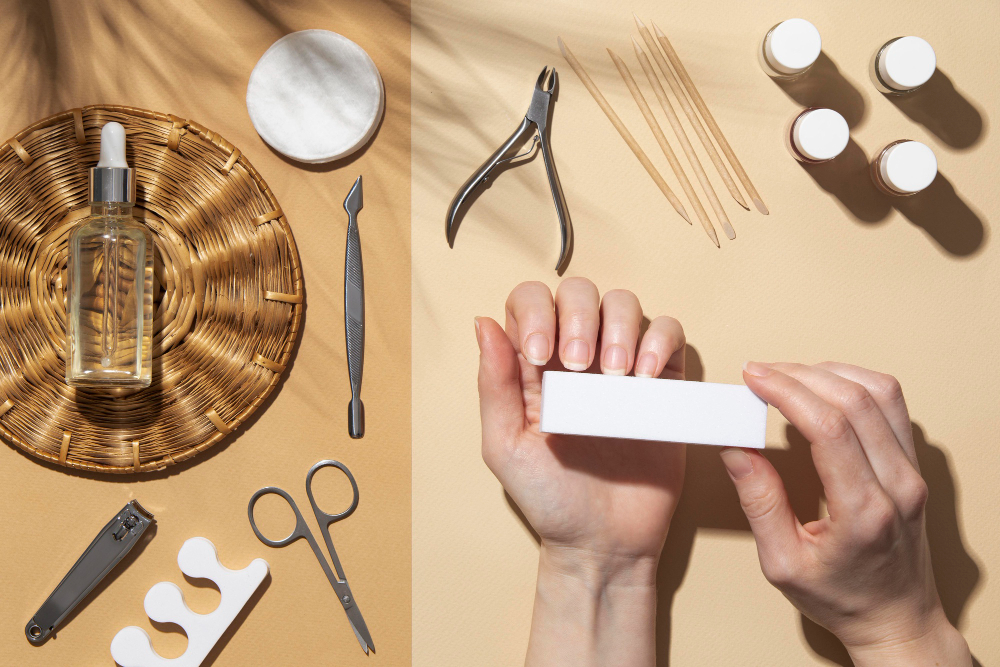

Beautiful, healthy nails don’t happen by accident. They’re the result of a consistent nail care routine that addresses everything from cuticle health to proper polish application.
Whether you’re a complete beginner or someone looking to refine their nail maintenance habits, establishing a regular routine is the foundation for strong, gorgeous nails that you’ll be proud to show off.
Many people think nail care is complicated or time-consuming, but the truth is that a solid routine can take as little as 15-20 minutes a few times per week.
The key is consistency and understanding what your nails actually need. In this comprehensive guide, we’ll walk you through every step of creating a nail care routine that works for your lifestyle, budget, and nail goals.
Understanding Your Nails: The Foundation of Good Care
Before diving into specific routines, it’s important to understand what you’re working with. Your nails are made of keratin, the same protein that makes up your hair.
They grow from the matrix, which is located under the cuticle at the base of your nail. The visible part of your nail is actually dead tissue, which is why you can cut it without pain.
Healthy nails should be smooth, uniform in color, and free from spots or discoloration. If you notice that your nails are see-through or appearing translucent, it might indicate thinness or certain nutritional deficiencies that need addressing.
The nail plate itself is made up of several layers, and damage to these layers can result in peeling, splitting, or brittleness. Environmental factors, chemical exposure, and even how you remove yellow stains from nails can impact nail health over time.
Daily Nail Care Habits
Morning Protection
Start your day by applying a nourishing cuticle oil or cream. Jojoba oil for cuticles is an excellent choice because it closely mimics your skin’s natural oils and absorbs quickly. Simply massage a small drop into each cuticle and the surrounding skin.
If you’re someone who types frequently or uses your hands throughout the day, consider applying a strengthening base coat or keeping your nails at a shorter, more manageable length. This prevents unnecessary stress and breakage.
Hand Washing Technique
While it might seem basic, how you wash your hands affects your nail health significantly. Always use lukewarm water rather than hot, which can dry out both your nails and cuticles.
After washing, gently pat your hands and nails dry rather than rubbing vigorously. Apply hand cream immediately after washing to lock in moisture.
Evening Nourishment
Before bed is an ideal time to give your nails extra attention. Apply a generous amount of cuticle cream and hand cream, then massage it in thoroughly.
Some people even like to wear cotton gloves overnight for an intensive treatment, though this isn’t necessary for daily maintenance.
Weekly Nail Maintenance Routine
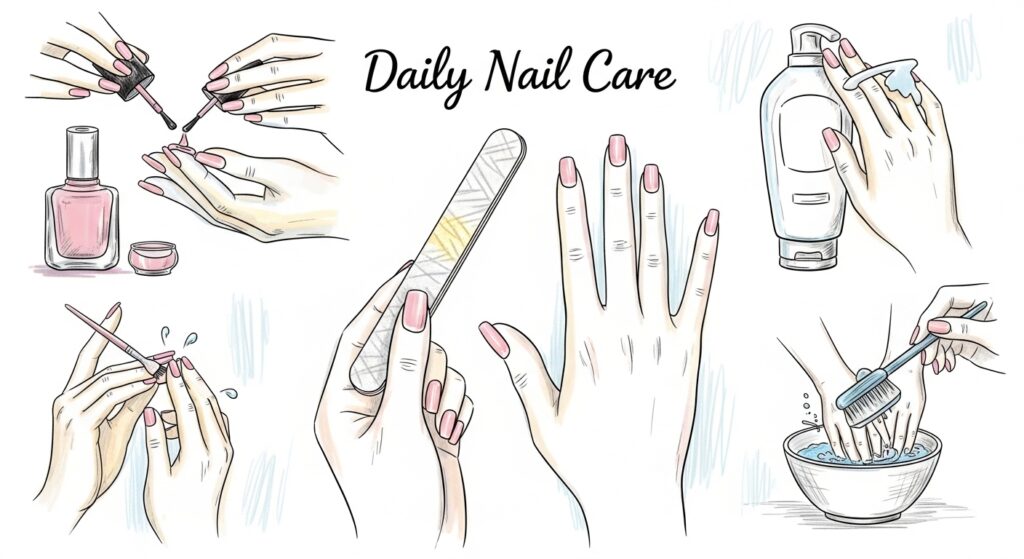
Step 1: Remove Old Polish (If Applicable)
If you’re wearing nail polish, start by removing it with a non-acetone remover when possible, as acetone can be quite drying. Acetone removers are sometimes necessary for gel polish or stubborn glitter polishes, but for regular polish, a gentler formula works well.
If you’ve been wondering why gel nail polish peels off, improper removal is often the culprit. Never peel off gel polish, as this removes layers of your natural nail with it.
Step 2: Soak and Soften
Fill a bowl with warm water and add a few drops of gentle soap or a specialized nail soak. Soak your nails for 5-10 minutes to soften cuticles and clean under the nails. You can add essential oils like lavender or tea tree for additional benefits.
Step 3: Clean Under the Nails
Using a soft nail brush or an orange wood stick, gently clean under your nails. Be careful not to dig too deeply or aggressively, as this can damage the nail bed and create space for bacteria to enter.
Step 4: Shape Your Nails
File your nails in one direction only, moving from the outer edge toward the center. Avoid sawing back and forth, which can cause splitting and weakening. The most universally flattering shapes are:
- Round: Best for shorter nails and wider nail beds
- Oval: Elegant and elongating, works for most nail types
- Square: Modern and practical, good for stronger nails
- Squoval: A combination of square and oval, very popular
Step 5: Cuticle Care
This is one of the most important steps in any nail care routine. Apply cuticle remover or softener and wait 30-60 seconds. Then, using a cuticle pusher (not metal implements if you’re a beginner), gently push back the cuticles. Never cut your cuticles unless absolutely necessary, as they protect your nails from infection.
Learning how to treat cuticles properly is essential for overall nail health. Damaged cuticles can lead to painful hangnails and infections.
Step 6: Exfoliate and Moisturize
Use a hand scrub to exfoliate dead skin around your nails and on your hands. Rinse thoroughly and pat dry. Follow immediately with a rich hand cream, paying special attention to the nail area.
Step 7: Buff (If Needed)
If you have ridges or want to create a smooth surface for polish, gently buff your nails. Don’t overdo this step, as excessive buffing can thin your nails. Once every week or two is sufficient.
Step 8: Apply Base Coat
Even if you’re not applying colored polish, a strengthening base coat protects your nails and can help prevent staining. Some people wonder if gel polish strengthens nails, and while it provides a protective layer, it’s the proper care routine that truly makes the difference.
Monthly Deep Treatments
Intensive Hydration Mask
Once a month, treat your hands and nails to an intensive hydration treatment. Apply a thick layer of hand cream or a specialized nail mask, cover with plastic wrap or gloves, and leave on for 20-30 minutes. This deep conditioning helps restore moisture and improve overall nail flexibility.
Nail Strengthening Treatment
If you have weak or brittle nails, consider using a strengthening treatment. These products typically contain proteins, calcium, or other fortifying ingredients. Apply according to package directions, usually 1-2 times per week.
Professional Assessment
If possible, visit a professional nail technician once every few months for a professional manicure and assessment. They can identify issues you might miss and provide expert advice tailored to your specific nail needs.
Special Considerations for Different Nail Types
Weak or Brittle Nails
If your nails break easily, focus on:
- Taking biotin supplements (consult your doctor first)
- Keeping nails shorter to prevent breakage
- Using nail hardeners sparingly, as overuse can make nails too rigid
- Avoiding water exposure when possible (wear gloves for dishes)
- Learning how to strengthen nails after gel treatments
Peeling Nails
Peeling occurs when the nail layers separate. To address this:
- Avoid harsh chemicals and excessive water exposure
- Use nail glue to seal peeling layers
- Apply multiple thin coats of strengthener rather than one thick coat
- Increase moisture with regular oil treatments
Fast-Growing Nails
If your nails grow quickly, you’ll need to file them more frequently. Keep a nail file handy and smooth any rough edges as soon as you notice them to prevent snagging and breaking.
Slow-Growing Nails
Stimulate growth by:
- Massaging cuticles daily to increase blood flow
- Ensuring adequate protein intake
- Using growth-stimulating nail treatments
- Protecting nails from damage so they can reach your desired length
Nail Care for Polish Lovers
Before Polish Application
Always start with clean, dry, oil-free nails. Any moisture or oil will prevent polish from adhering properly. Use a cotton pad with rubbing alcohol to cleanse the nail surface right before applying base coat.
Making Polish Last
To extend the life of your manicure:
- Apply thin coats rather than thick ones
- Wrap the tips (paint the free edge) with each coat
- Use quick-dry drops or spray
- Reapply top coat every 2-3 days
- Wear gloves when doing dishes or cleaning
If you prefer gel manicure tips, remember that while gel polish lasts longer, it requires proper curing and removal techniques.
Safe Removal Practices
Never peel off any type of polish. For regular polish, use non-acetone remover when possible. For gel polish, follow proper removal procedures or visit a professional. Understanding which nail drill bit to use to remove gel polish is important if you’re removing gel at home.
Tools You Need for a Complete Nail Care Routine
Essential Tools
- Glass or crystal nail file (gentler than emery boards)
- Cuticle pusher (preferably wooden or rubber)
- Nail clippers (keep clean – learn how to clean nail clippers regularly)
- Buffer block (optional)
- Nail brush
Recommended Products
- Cuticle oil or cream
- Non-acetone polish remover
- Base coat
- Top coat
- Hand cream
- Nail strengthener (if needed)
Advanced Tools (Optional)
For those who want to do more advanced nail care at home:
- Nail drill bits for professional-level maintenance
- UV lamp if you do gel manicures (check out the best UV nail curing lamps and avoid common UV lamp mistakes)
- Professional cuticle nippers (only if you’re experienced)
Nail Health Red Flags
When to See a Doctor
Certain nail changes warrant medical attention:
- Sudden color changes (dark streaks, yellowing, or blueness)
- Painful or swollen cuticles
- Thickened or crumbly nails
- Separation of the nail from the nail bed
- Horizontal ridges or dents
If you’re concerned about nail fungus, consult a dermatologist for proper diagnosis and treatment.
Signs of Overworked Nails
If your nails are constantly exposed to enhancements, they may show signs of damage:
- Excessive thinness or flexibility
- White spots or patches
- Brittleness
- Slow growth
Give your nails a break by going natural for at least a few weeks every few months. Focus on treating nails with strengthening treatments and intensive moisture during these recovery periods.
Lifestyle Factors That Affect Nail Health
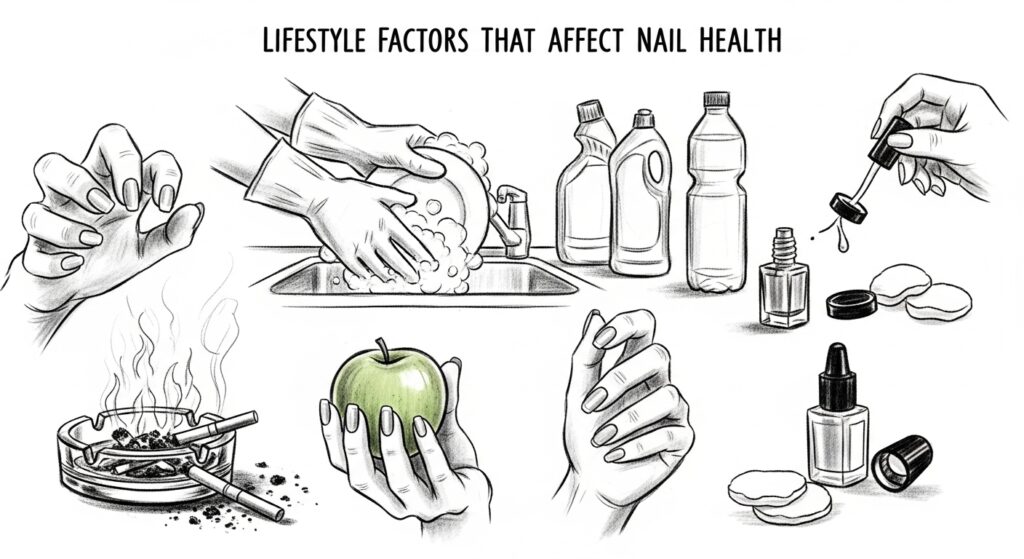
Nutrition
Your nails reflect your overall health. Ensure you’re getting adequate:
- Protein: Essential for keratin production
- Biotin: Supports nail thickness and reduces brittleness
- Iron: Prevents ridging and spoon-shaped nails
- Zinc: Important for nail growth and repair
- Omega-3 fatty acids: Promote moisture and flexibility
Hydration
Drinking enough water is crucial for nail health. Dehydrated nails are more prone to breaking and peeling. Aim for at least 8 glasses of water daily.
Sleep
During sleep, your body repairs and regenerates, including your nails. Aim for 7-9 hours of quality sleep each night.
Stress Management
Chronic stress can manifest in your nails through ridging, slow growth, or even nail biting. Practice stress-reduction techniques like meditation, exercise, or hobbies you enjoy.
Common Nail Care Myths Debunked
Myth 1: Nails Need to “Breathe”
Nails don’t breathe since they’re made of dead cells. Polish doesn’t harm nails by “suffocating” them. However, giving nails a break from polish can prevent staining and allow you to assess their condition.
Myth 2: Gel Polish is Always Damaging
Gel polish itself isn’t necessarily damaging. The problems arise from improper application, removal, or overuse without breaks. When done correctly, gel manicures can be part of a healthy nail routine.
Myth 3: Cutting Cuticles Makes Nails Healthier
Actually, cuticles protect your nails from infection. Cutting them can lead to painful hangnails and increase infection risk. Push them back gently instead.
Myth 4: White Spots Mean Calcium Deficiency
White spots (leukonychia) are typically caused by minor trauma to the nail matrix, not calcium deficiency. They’ll grow out naturally.
Adapting Your Routine to Your Lifestyle
For Busy Professionals
If you’re short on time:
- Do a quick oil application every morning (30 seconds)
- File nails while watching TV
- Use press-on nails and learn how to make press-on nails last for special occasions
- Schedule monthly professional manicures instead of weekly at-home sessions
For Active Individuals
If you work with your hands or exercise frequently:
- Keep nails short to prevent breakage
- Apply strengthener weekly
- Moisturize multiple times daily
- Consider nail wellness supplements
For Polish Enthusiasts
If you love changing your nail color:
- Always use a base coat to prevent staining
- Learn proper gel vs dip nails techniques
- Master how to make nail polish dry faster
- Invest in quality tools and products
Creating Your Personalized Nail Care Schedule
Here’s a sample weekly schedule you can adapt:
Sunday: Full nail maintenance routine (shape, cuticle care, polish) Monday-Friday: Quick morning cuticle oil application Wednesday: Midweek touch-up (oil treatment, polish repair if needed) Saturday: Hand scrub and intensive moisturizing treatment
Adjust this based on your nail growth rate, lifestyle, and personal preferences. The key is consistency rather than perfection.
Emergency Nail Fixes
Broken Nail
Don’t panic! Learn how to fix a broken nail at home using a tea bag or silk wrap method. This temporary fix can save your manicure until the nail grows out.
Smudged Polish
Keep a small bottle of quick-dry top coat handy. If you smudge fresh polish, wait a minute, then apply a thick coat of top coat over the smudge to smooth it out.
Hangnail
Never pull or tear a hangnail. Instead, clip it carefully with clean nail scissors or cuticle nippers, cutting straight across at the base. Apply antibiotic ointment if needed.
Seasonal Nail Care Adjustments
Winter Care
Cold weather and dry indoor heating can wreak havoc on nails:
- Increase moisturizing frequency
- Wear gloves outdoors
- Use a humidifier indoors
- Apply cuticle oil before bed
Summer Care
Heat and humidity require different care:
- Use lighter moisturizers that won’t feel greasy
- Protect nails with SPF hand cream
- Be careful with swimming pools (chlorine is drying)
- Stay hydrated from within
The Bottom Line on Nail Care Routines
A successful nail care routine doesn’t have to be complicated or expensive. It’s about consistency, using the right techniques, and listening to what your nails need. Start with the basics—regular filing, cuticle care, and moisturizing—and build from there based on your goals and lifestyle.
Remember that healthy nails are a long-term investment. You won’t see dramatic changes overnight, but with a few weeks of consistent care, you’ll notice stronger, healthier, more beautiful nails. Whether you prefer natural nails, love elaborate nail art, or fall somewhere in between, a solid foundation of good nail care practices will serve you well.
The most important thing is to be patient and gentle with your nails. Avoid harsh treatments, don’t skip the moisturizer, and give your nails the attention they deserve. With the right routine, you’ll have strong, healthy nails that you’re proud to show off, polish or no polish.
Additional Resources
For more information on nail care and maintenance, consider visiting:
- American Academy of Dermatology (aad.org) for medical advice on nail conditions
- National Institutes of Health (nih.gov) for research-based nutrition information
- Professional beauty associations for technique tutorials and product recommendations
Your nails are a reflection of your overall health and self-care habits. By establishing and maintaining a consistent nail care routine, you’re investing in both your appearance and your well-being.
Start today, stay consistent, and watch your nails transform!